
Water exists at the centre of my practice — not simply as subject matter, but as a way of thinking through structure, movement, rhythm, and transformation.
Whether working with pins, cut and folded surfaces, drawing, or painting, I return repeatedly to qualities associated with water: flow, instability, repetition, turbulence, pressure, reflection, suspension, erosion, and change. Sometimes these references appear visibly through tidal maps, waves, or river contours; at other times, they remain embedded within the internal behaviour of the work itself.
I currently live and work in a 17th-century water mill, where my studio sits at the edge of the River Dart. Living in close relation to tides, rain, mist, rivers, and shifting weather conditions has deeply shaped my visual language.
Observation also takes place through sailing, coastal walking, and mountain walks in England, Ireland, Scotland, and abroad — often through extended periods spent watching changing landscapes and weather systems.
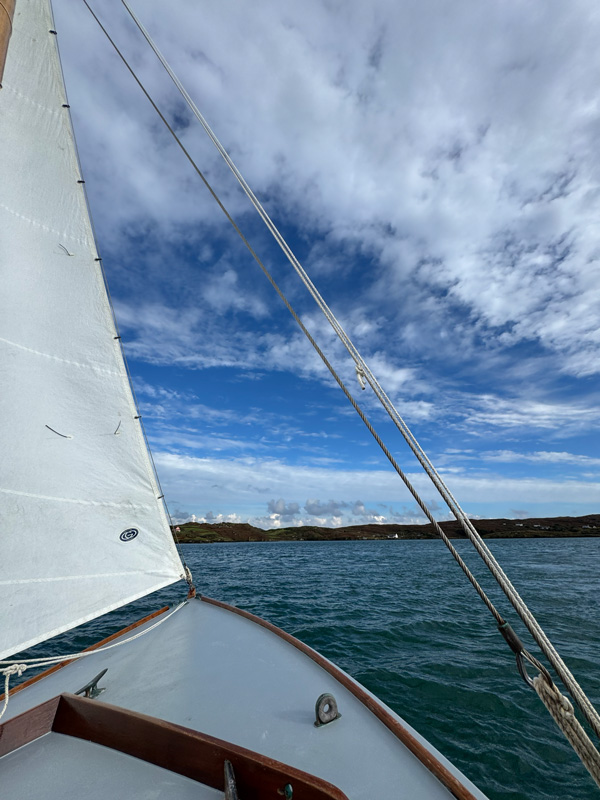
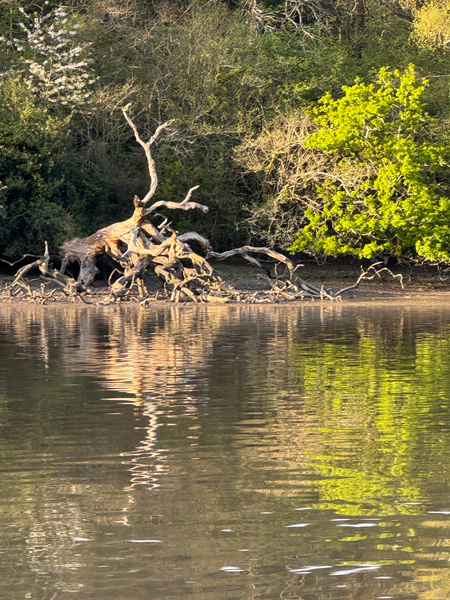
I remain attentive to the different states of water: liquid, vaporous, frozen; calm or turbulent; reflecting light, forming mist, snow, waves, and currents. These experiences accumulate gradually, informing the work through rhythms, structures, movements, and material behaviours.
I am not interested in representing water literally, but in understanding how its dynamics can be translated into material systems. A surface can behave like a current. Density can evoke pressure. Repetition can generate rhythm. Structure can embody flow.
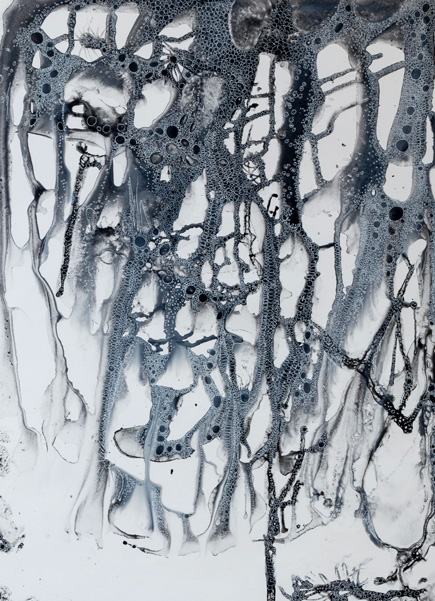
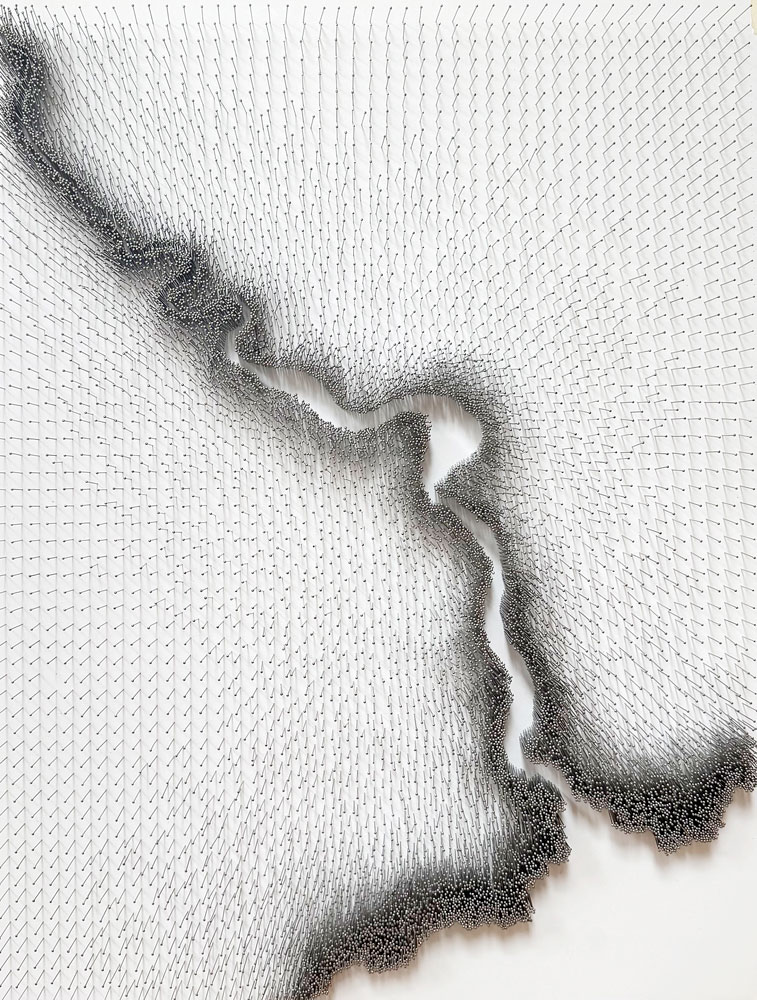
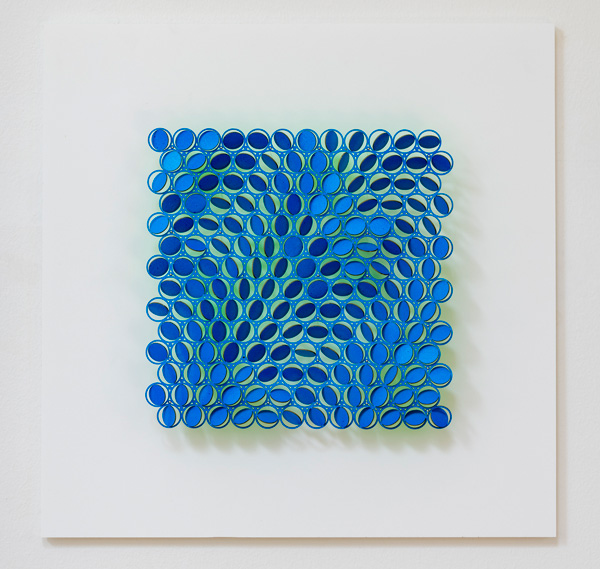
This relationship unfolds across multiple scales within the work. In series such as Tide Greenway Quay and Tide London Bridge, tidal harmonics measured over twelve-day cycles become cut and folded structures shaped by tidal relationships between Earth, Moon, and Sun. Here, water is approached through geography, data, mapping and cosmic rhythm. The works transform tidal movement into physical form, connecting landscape, time, and celestial systems.
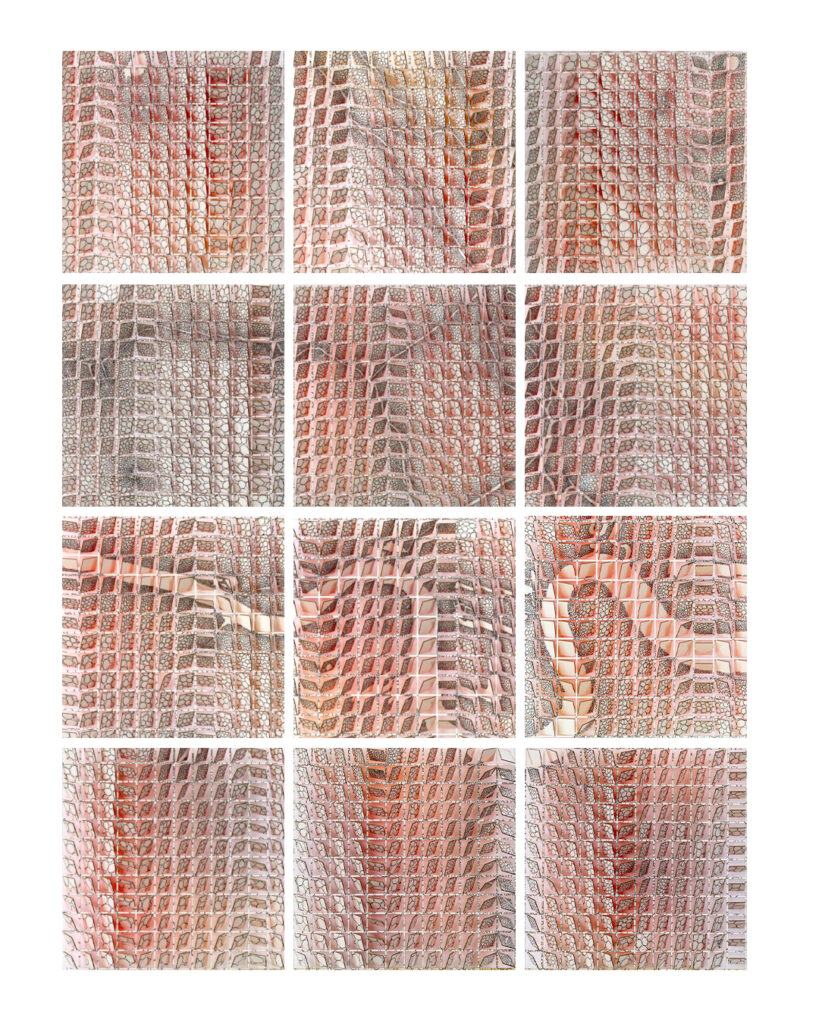
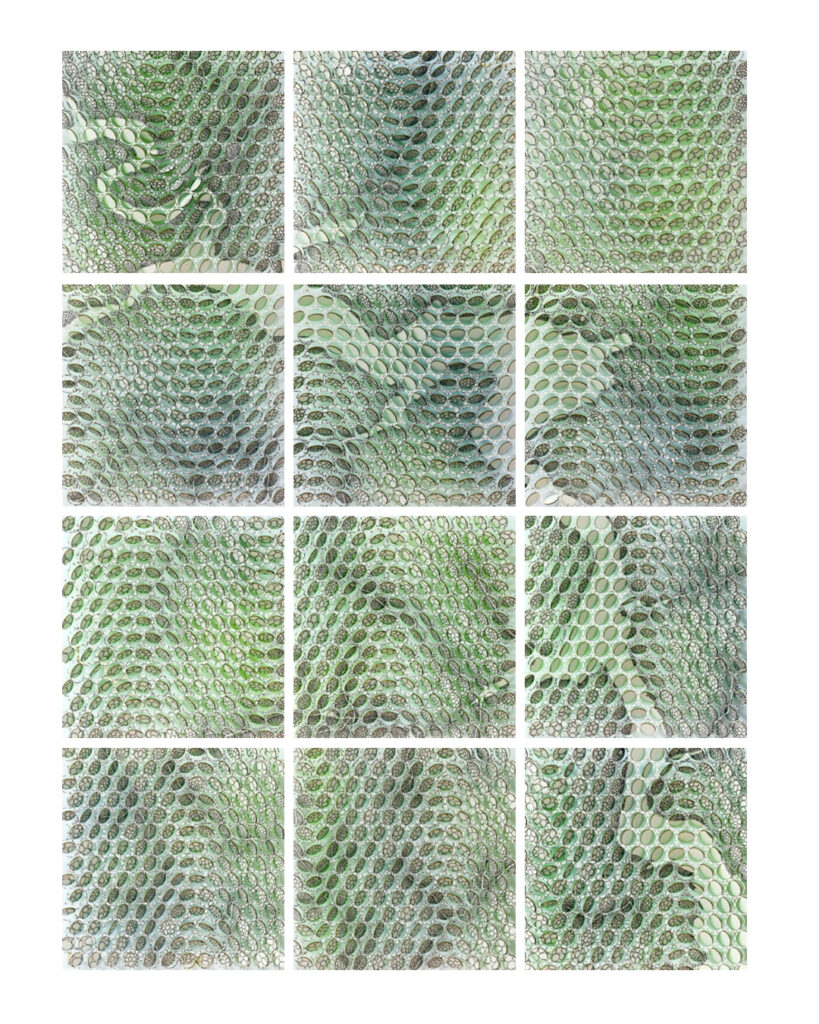
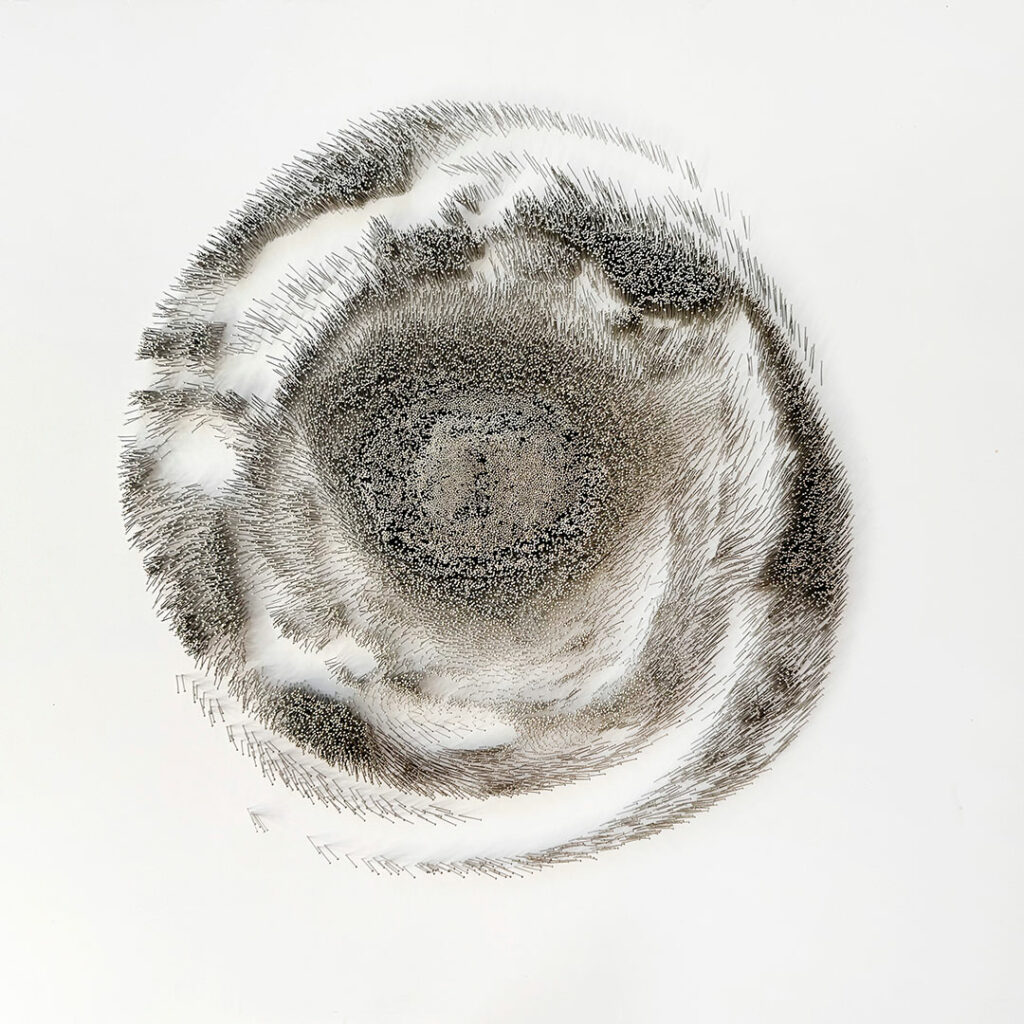
At other moments, the focus becomes more intimate and microscopic. Works such as Cellular and the broader PIN series examine how fluid behaviours emerge through accumulation, proximity, tension, and repetition.
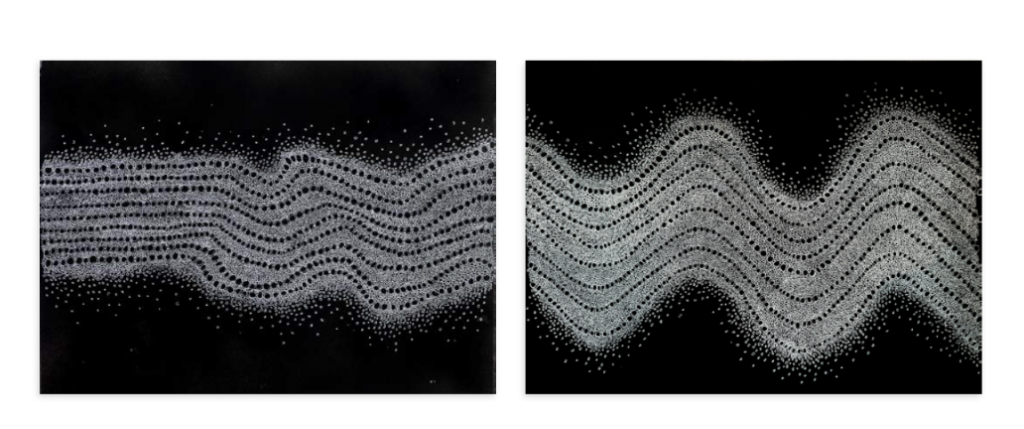
Whether through shadows cast by pins, layered surfaces, or shifting optical effects, these works attempt to capture something unstable and continuously changing — much like water itself.
Across all these series, water operates less as image and more as structure: an underlying logic through which the work is constructed, observed, and experienced.